How Many Hours a Day Do You Homeschool?

One of the first questions people ask when they hear we homeschool is, “how many hours a day do your homeschool?”

Immediately, questions pop up in my own mind because there are so many variables and no two days are alike. Some of those variables are the number of children doing lessons, the number of babies and toddlers that need to also be watched, or which curriculum is being used.  

homeschooling family
Dad reading to his child is part of homeschooling

What is Homeschooling?

The most important thing to make sure to understand is that homeschooling is NOT like the same style of learning that occurs in a public/private/parochial schooling.  There are as many styles of homeschooling as there are homeschoolers.  Each of those families will also tell you totally different responses to the question of how many hours a day do you homeschool? 

Where to start

If you are at the beginning stages of thinking about homeschooling your children, your first stop should be Home School Legal Defense Association (HSLDA) to learn about your state homeschool requirements.  Some states actually mandate a certain number of hours of instruction for homeschooled children in a given school year.  Oddly, these mandates are written by people who do not know much about homeschooling nor do they really grasp how little actual instruction a child in a school building indeed receives.  Some states do not mandate a certain number of days or hours, but you will need to review your states’ requirements and adhere to them. 

There is a famous motto from a style of schooling that says, “Education is an atmosphere, a discipline and a life.”  Many homeschool families model their lives around learning.  These families consider the everyday work of living as opportunities to build character, virtue, and teaching lessons.  When Dad makes a loaf of banana bread, the children helping are learning about fractions from the recipe as well as how to lovingly work for the needs of one another.  Children helping as Mom weeds the garden are learning about plants, plant life, insects, ecology, and the discipline of doing that which needs to be done. 

A homeschooling family
A homeschooling family can all work together

Homeschool Schedule

Some homeschool families are regimented about maintaining a specific schedule to their day.  Families with children in varying age ranges can benefit from maintaining a schedule such as the one discussed here.  Families schooling maybe just one child, with non-school age siblings will maybe want a routine like the one discussed here

As a rule of thumb, children in the early elementary grades (kindergarten-4th grade, approximately) should not spend more than 1-2 hours doing seated learning.  Most of a young child’s learning time should be spent outdoors, playing or doing the things of life such as helping with cooking, cleaning and gardening and listening to read-alouds.  There is an amazing website devoted to families reading aloud called Read-Aloud Revival.  You will learn about the benefits, books lists for every age group and podcasts about the topic.

Children in the middle grade years (5th-8th grade, approximately) will slowly increase the number of hours of seated learning from 2-5 hours as they get older.  It is still important that children in this age group get plenty of time outdoors, time to play, do independent reading as well as listen to family read-alouds.  This age group will also begin to take over household chores and begin caring for young siblings as well.

High school aged young people will spend a considerable length of their day doing lessons.  Most will be able to complete assigned lessons in 4-6 hours.  This age group will need to be encouraged to get enough time outdoors, but will be a great asset to homelife taking on household chores, errands, childcare as well as household maintenance.  All of these activities help a child blossom from infancy to a helpful, responsible, productive adult who has had a love of learning instilled.

Getting going with Homeschooling

Now that you have some idea of how many hours a day to homeschool, you may next wish to learn more about how to start, what style of learning matches your family, what curriculum to use, how to set up your home for learning, how to comply with your state’s homeschooling laws, what records you will need to maintain and how to find support for yourself as your children’s teacher. 

A child working on his homeschool curriculum
Children can work on their school work alone

If you are new to homeschooling, the topic is vast and the internet is full or so many wonderful ideas.  Read from a diverse set of bloggers and homeschool websites, find your favorites that match your teaching style, maybe your faith and then do not try to do it all.  You can quickly become overwhelmed.  Also, find other homeschool families around you so you can learn what is offered locally.  There may be cooperative learning opportunities, homeschool field trips, playgroups, meet-ups, conferences, and organizations.     

Planning your homeschool day and year is made easier with a well produced homeschool planner.   

Conclusion

There are some really well-written books about homeschooling as well.  Please check some of these out from your local library, Amazon carries many and Thirftbooks will frequently have them available as well.

The Brave Learner by Julie Bogart

Homeschool Bravely by Jamie Erickson

The Call of the Wild and Free by Ainsely Arment

Teaching from Rest by Sarah Mackenzie

Home Grown by Ben Hewitt

The Read Loud Family by Sarah Mackenzie

Plan Your Year by Pam Barnhill

Designing Your Own Classical Curriculum by Laura Berquist

Catholic Education: Homeward Bound by Kimberly Hahn

Managers of Their Homes by Steven Maxwell

Best wishes in your homeschooling journey! Be sure to check out our other exclusive Guides found only on LincOn.com.



How Can I Lose a Pound a Day?

How can I lose a pound of surplus weight in a day? That is an interesting question that needs to be broken down a little further.  Everyone wishing to lose weight or begin an exercise program should first have their health checked by their physician.

Burning Calories is the key to losing a pound a day
Burning Calories

It is important to note that the current health and fitness of an individual will determine the amount of calories used throughout the day and during exercise.   An individual with excess weight uses more energy doing the same motion as a lighter and more fit individual. 

Did you know that a pound of fat equals 3500 calories? You have to consume 3500 extra calories above and beyond the approximately 2000 calories the average adult uses per day in order to add a pound of fat to your body.  A few weeks of consuming more calories than your body needs, and pretty quickly you will begin to feel the pounds adding to your body.  Your metabolic rate is the rate at which your body uses calories doing all those involuntary actions your body does naturally.  So that means all the calories necessary for pumping your heart, restoring cells, inhaling and exhaling.  In order to lose weight, you have to move and bring in fewer calories than your body uses daily (your metabolism). 

Lose a Pound a Day

Remember that you must eat, even when you are losing weight.  Starving yourself of caloric intake can be harmful and cause health problems. 

In order to lose a pound in a day, you will need to find the right combination of diet and exercise.  Below are weight loss recommendations that might help you lose a pound a day.

1. Curb Your Desire for Food

Ask your physician if she recommends using a hunger suppressant.  One such suppressant is called Leanbean

2. Consume healthy protein throughout the day.

3. Stay away from sugar.

Cut simple carbs (white bread, pastas, baked goods, sugar-added beverages etc) from your diet.

4. Eat smaller and more frequent meals.

Consuming protein along with vegetables and fruit regularly during the day will help to make you feel full and decrease your appetite for those fat loving simple carbs.   

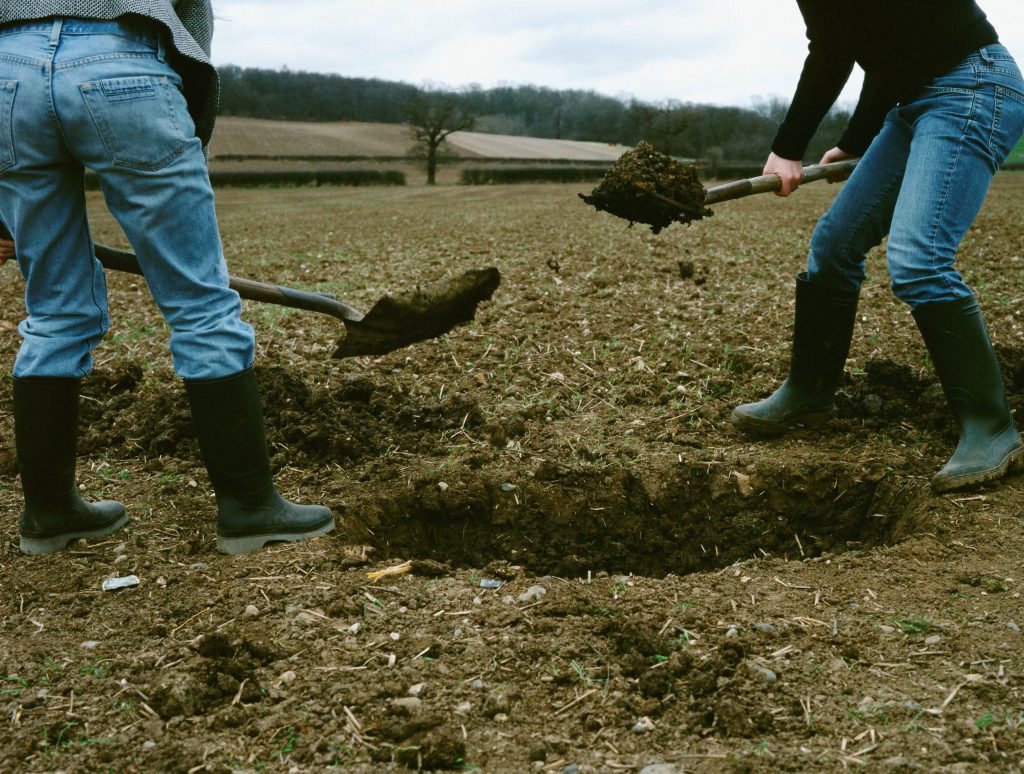
Shoveling dirt and other strenuous work can help in losing weight.
Strenuous work can aid in burning calories

5.  Exercise.

Losing a pound a day is going to mean doing strenuous physical work.  You will need to do a substantial exercise, such as cross-country running or arduous manual labor, such as digging fence post holes or shoveling snow.  This kind of demanding physical exertion  will use additional calories.

6. Check your stress level.

Excess stress can contribute to weight gain.  Some helpful activities that will help reduce your stress would include meditation, walking outdoors, yoga and deep breathing.  If you have extra stressors in your life, try talking to a mental health professional.  There are many underlying mental health factors that contribute to consuming too many calories. 

7. Eat several servings of fish every week.

Fish contains healthy omega-3 fatty acids that help improve your body’s fat-burning ability.

Conclusion

We wish you the very best as you strive to become more fit and healthy.  Be sure you speak with your physician before undertaking any weight loss or new diet & exercise regiment.


Maple Sugar

Maple sugar is sweetener produced by maple trees. It’s the primary ingredient (along with water) in real maple syrup. Also known as granulated maple sugar it is produced by removing water from maple syrup till only the sugar crystals are left.

Maple sugar can be used as a sweetener anywhere that sugar is used but teaspoon for teaspoon it has fewer calories than cane sugar and it has a lower glycemic impact on the body. It can be purchased for baking and other uses or it can be made if you have the right equipment.

granulated maple sugar

Where does maple sugar come from?

As mentioned, maple sugar is produced by maple trees. The sugar is produced as the maple tree converts sunshine to sugar via photogenesis . The sugar is stored in the roots during the fall for use in jump starting leaf growth in the spring.

maple leaves on branches
Maple sugar comes from maple trees – it is produced in the leaves by photosynthesis

In the spring as the ground thaws, cold and warm temperature swings cause the sugary water called sap to rise to the maple trees branches to feed the budding leaves. This sap travels through the outer layer of the tree. Small holes are drilled into the outer bark and wood of the tree to capture a very small portion of this sugary water. The sap contains about 96-99% water. The rest is sugar!

The sap is then concentrated by removing excess water until there is only about 33% of the water left. This liquid is called maple syrup. It’s mostly sugar but the water makes it liquidy.

making maple syrup
Maple syrup is made up of maple sugar and water. The excess water is removed to make maple sugar,

To make granulated maple sugar, the syrup is then further boiled until the temperature is around 265° and then stirred until all the water is gone and only granulated maple sugar is left. It is further “refined” by sifting it and removing any large chunks that may have formed.

What is maple sugar made up of?

Maple sugar is one of the healthier natural sugars. It is a source of antioxidants and trace minerals like manganese, riboflavin, zinc, magnesium, calcium and potassium – all important minerals for health. This means that there are a lot of health benefits to maple sugar!

Where to buy it

Maple sugar is available at many stores but you’ll pay a premium for that. The cheapest option to is buy it online, direct from a producer. You get a lower price and more sugar so you can use it more frequently and you help a producer at the same time. The sugar you’ll buy in most grocery stores is from wholesale buyers who often pay producers the lowest price so buying direct helps them out.

If you need bulk quantities (10, 20 or more pounds), you can even buy that online with FREE SHIPPING! 20lbs sells for $175 and since it is a dry product it is shelf stable so you don’t need to worry about it expiring. See also our article Does maple syrup go bad?

How to make maple sugar

In addition to being purchased online, maple sugar can also be made relatively easily in your home if you have the right tools. To make maple sugar you will need a medium to large saucepan, a candy thermometer, wooden spoon or spatula and some maple syrup. Most maple syrup can be used but occasionally some very dark syrup will not granulate. It also helps to have a little canola oil to spray or add a few drops to knock down the foam that will inevitably appear. If you want to make more than quart at a time, you might want to consider using a stand mixer for the final step.

Start by pouring a quart of syrup in a medium saucepan. You can add more syrup into a larger saucepan but unless you are going to use a stand mixer, your arm might get tired. Heat the syrup on a low to medium heat. Allow the syrup to come to a boil. As it comes to a boil it will start to foam up – if it comes to a boil too fast it will foam over.

Tip – as it comes to a boil, add a few drops of canola oil. The foam will dissipate.

Allow the syrup to come to a solid boil. When it does, you can slowly increase the temperature and allow the syrup the boil faster. A faster boil will not burn the syrup. Watch for foam! If it foams over, add some canola drops or turn down your burner.

Once you have a solid, steady boil, monitor the temperature with a candy thermometer and wait for it to reach at least 260°. 265° is better because it will granulate faster. Once it reaches that temperature, pour it into a mixing bowl. Start stirring it by hand with a wooden spoon or start your stand mixer on low. Stir clockwise for about a minute and then counter clockwise for another. Alternate and then after about 5 minutes the mixer will get very hot and start to look like peanut butter. KEEP STIRRING. After another minutes the peanut butter like mixture will become powdery. The harder you stir at this point, the looser your sugar will become.

stirring maple syrup to make maple sugar
Mixing the heated syrup in a mixer

Each quart of syrup should produce about 1.5-2lbs of sugar. It’s normal to see chunks of sugar. Those can either be used in coffee or tea or thrown back into your mixer until they break apart and are small enough use in baking or other uses.

Conclusion

Maple sugar is a great natural sweetener than can be used anywhere that cane sugar is used. Hopefully this guide has shown you some of the benefits of using natural sugars. Be sure to check out our other exclusive Guides found only on LincOn.com.


ATV Snowblower

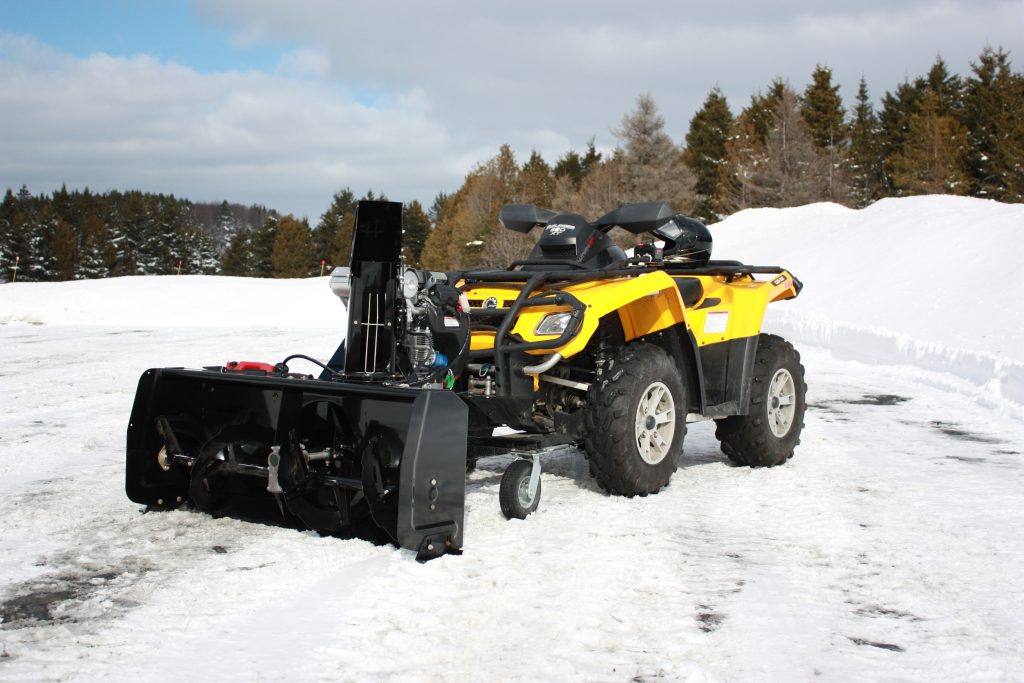
ATV’s are very versatile tools and if you live in a northern climate that receives a decent amount of snow, you be looking at it and wondering if you can use an ATV to clear snow. There are snowplows that you can mount on the front of your ATV but clearing snow by plowing it isn’t always a great idea. What about a snowblower? This ATV snowblower guide will show you some options to using a snowblower with a your ATV.

Snowblower features to consider

It may seem like a simple thing – just mount a snowblower to the front of your ATV and you’re good to go but there is more to consider. First you need to consider the size of the path you want to clear. Then you need to consider the weight along with the mounting bracket to make sure that it will fit your ATV. Finally, you’ll want to consider the opening size and the horsepower to be able to clear the snow in your area.

How wide of a path?

First thing to consider is how wide of a snowblower do you need? You might be thinking of your driveway but what about walkways? How wide are those paths? If you get a wider snowblower like 48 or 52″ it means you can clear your driveway in a couple of swaths but will you be able to clear the paths around your house with that? If you go with a narrower swath it will mean more time clearing your driveway. Weigh those pros and cons and determine what is more important to you.

Snowblower Weight

Most ATV snowblowers are mounted to the front winch of your ATV so you need to factor in how much weight your ATV can carry. Most ATV’s ahave a limit that they can carry/pull on their winches so when you look at the models below or at a winch mounted snowblower, keep the weight in mid so you don’t overload the front of your ATV.

How much power do you need?

Most ATV snowblowers are powered by external engines. The engine powers both stages of the snowblower – the impeller which draws the snow in and the chute which throws the snow. The wider the snowblower, the more power that is needed to bring that snow in and throw it.

If your area receives a lot of powdery or fluffy snow, you’ll need less power than areas that receive wetter snows. I like to consider my “worst case” scenario and make sure that I have the power to move that snow. A good rule of thumb it have about 0.37 HP per inch of your swath and that should be more than adequate to handle what you throw at it.

In addition to the width, you need to consider the height of the intake. The hardest area of snow to clear is at the end of your driveway and that pile will be many times larger than your deepest snowfall so don’t buy something with too small of an opening.

ATV Snowblower brands

Keeping in mind all of the factors above, take a look at the comprehensive list below of ATV snowblower manufacturers and see what might work for you. Snowblowers come in all different sizes, weights, and powers. Some are even designed specifically for certain brands.

Bercomat snowblower
Bercomat Snowblower

Bercomac

Berco is pretty much the standard by which other ATV snowblowers are measured. It’s a family owned business that produces high quality snowblowers that can be mounted on many different ATV models. Bercomac uses reliable Honda engines and are available with a 48″ model and a 54″ model. The units all electronically controlled and can be mounted in 5 minutes.

Iron Baltic

Iron Baltic Snowblowers
Iron Baltic Snow Blower

Iron Baltic manufactures several snowblowers for ATV’s. They range in width from 49-71″ and are available with several different engine configurations. Engines range from the Honda GX390, the Briggs & Stratton XR Professional series and the Briggs & Stratton Vangard. The chute is electronically adjustable and can throw the snow up to 49′ so you can most likely send the snow clear out of your yard!

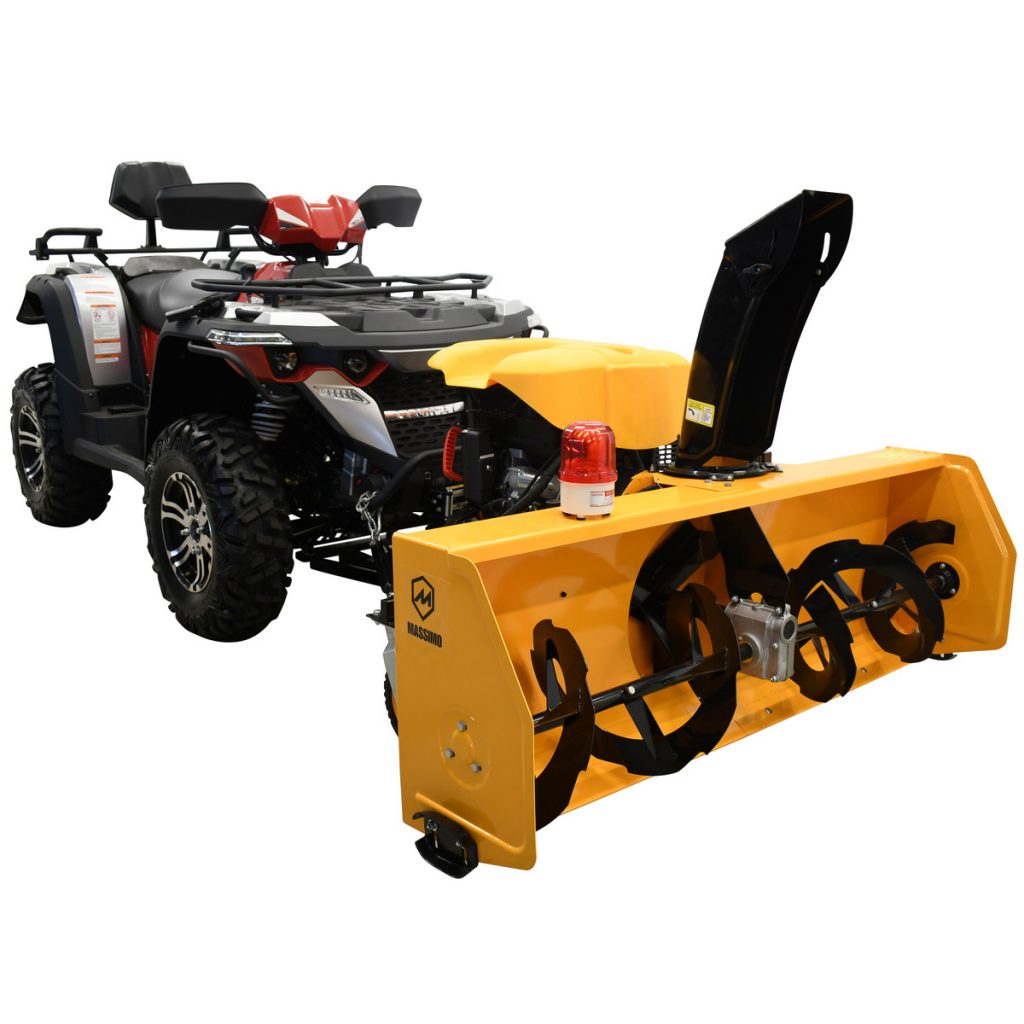
Massimo

Massimo ATV Snowblower

Massimo makes is a manufacturer of ATV’s, side-by-sides and other equipment for outdoor use. As part of it’s line up that make a 60″ snowblower with a 420cc engine (about 13 HP) designed for UTV’s but might be an option for ATV owners. The snowblower also features a strobe light and a electric control over the shoot adjustment. The unit comes with a universal mounting plate so it can be mounted on other brands than Massimo.

Quadivator

Quadivator Snowblower

Quadivator makes a 50″ snowblower than can mount to most snowblowers. They feature an 18HP Briggs & Stratton engine mounted to a frame and it becomes basically a PTO engine and allows several different attachments which are connected via belts. Attachments include the snowblower, a lawn mower and a power sweeper so this allows some flexibility.

Rammy

Rammy ATV Snowblower

Rammy is a company based in Finland so it knows how to deal with snow. The Rammy Snowblower 120 ATV comes with a Briggs and Stratton engine and universal mounting for different brands like Polaris, Can AM, Arctic Cat and Click&Go

Other brands

There are some companies that over time that used to make snowblowers that would attach to ATV’s. In addition to national brands, there may be region or local shops making models that might show up on Craigslist or eBay. The key components are the performance which is driven by the engine and how well built the unit is. If you’re willing to work on something or work with a local shop, it might be worth taking a look if it can do what you need it to.

Concluding thoughts

Hopefully this guide has been helpful in letting you know what to look for in an ATV snowblower. There’s clearly some options out there with a number of companies producing high quality products that will give you years of use and allow you to put your ATV or UTV to use at a time of year when sometimes they don’t get used. Additionally, it makes the job of clearing snow that much easier.

In my guide for Snowmobiles for Heavy Riders I mentioned that there are several manufacturers that make track systems to replace your ATV tires as an alternative to a snowmobile but that option could also extend the life of your ATV into winter and combined with a snowblower can make for a formidable tool in the winter.

I hope you enjoyed this guide. If there are any ATV snowblowers we’ve left off this list, please email Dave at dbroer@lincon.com with your suggestion!

Be sure to check out other other exclusive Guides on LincOn.com!


How long is a football field

How long is a football field? It’s 300 yards but what is you want to know how long is a football field is in feet? Miles? Look below to find out how long it is in different units including thou, cubits, leagues and other fun archaic ancient measurements.

How long is a football field?

How long is a football field in chain?

A football field is 13.636 chain long. A chain is a measurement used in surveying. It is 22 yards long.

How long is a football field in cubits?

A football field is 76.595 to 205.949 cubits long. It varies because the ancient cubit is 17.48″ to 47″ and there are 3600″ in a football field.

How long is a football field in fathoms?

A football field is 50 fathoms. It’s usually used to measure depth and is 6′ or 2 yards in length.

How long is a football field in feet?

A football field is 300 feet in length. There are 3 feet in yard.

How long is a football field in inches?

A football field is 3600 inches long.

How long is a football field in furlongs?

A football field is 0.454 furlongs longs. A furlong is 220 yards long and 1/8 of a mile.

How long is a football field in kilometers?

A football field is 0.091 kilometers long.

How long is a football field in leagues?

A football field is 0.056 leagues long. The NFL has leagues 32 leagues but a league is an ancient length that 1760 yards long.

How long is a football field in line?

A football field is 43,200 line long. A line is 1/12 of an inch.

How long is a football field in meters?

A football field is 91.44 meters long.

How long is a football field in miles?

A football field is 0.056 miles long.

How long is a football field in nautical miles?

A football field is 0.49 Nautical Miles long.

How long is a football field in rods?

A football field is 18.182 rods long. A rod is 16 1/2 surveyors feet long.

How long is a football field in thou?

A football field is 3,600,000 thou long. A thou is 1/1000 of an inch in case you were wondering.

Conclusion

You can basically take any unit of measure and determine the length of a football field as you can see. If there is a unit that we’ve left off this list, be sure to email us!

This is one of our Guides. Be sure to check out our other exclusive Guides on LincOn.com.


Soapstone Mountain

Soapstone Mountain is a mountain in Somers, CT. The summit is 1075′ (328m). It’s located in the 7000+ acre Shenipsit State Forest which is located in the towns of Somers, Stafford and Ellington, CT. It’s a popular spot with the only observation tower in Eastern Connecticut. Although the summit is not that high, it is prominent over the surrounding terrain and an observation tower on its summit provides a commanding view that includes four states.

The view from Soapstone Mountain
The view from Soapstone Mountain includes 4 states – Connecticut, Massachusetts, New Hampshire and Vermont

History

Soapstone Mountain gets its name from the historic quarry that was located on its slopes. The remains of the quarry can still be seen today along the Quarry Trail located on the eastern slope. The trail leads from the summit area to the base parking area.

The trail and the mountain get their name from an old quarry that mined soapstone. Soapstone was used in many homes in the colonial days and thus the quarry provided an important resource. Little information is know about the quarry but it certainly did exist!

Soapstone Mountain is where the surrounding Shenipsit State Forest started. It was purchased by the state in 1927 to erect a fire tower. That fire tower remained until the late 1970s when it was removed.

Recreation Options

The Soapstone Mountain area is full of recreational opportunities. The area is popular with hikers, mountain bike riders, picnicking and other outdoor activities.

An annual race takes place on the mountain. The 24km race has been run since the 1970s and uses the mountains terrain to add to race.

Summit Facilities

There is an auto road which leads to the summit off Gulf Road in Somers. The summit area features a small parking area and so if it is full you will need to park at the base and hike up. Beware that the site can become crowded on weekends and both parking areas can be full.

Surrounding the summit area are several picnic sites with a view looking to the north and east. One is located just off the summit and offers a great view to the east.

As you walk from the summit area parking lot to the actual summit, there is a fenced in area which houses a tower that was the former Bradley International Airport National Weather Service office’s weather radar. That tower is where the former fire tower was located. The for radar tower now holds antenna’s for the State Police and Tolland County Fire Departments. There is also a building located in the fenced in area that houses the transmitter equipment.

Near the fenced in area is the obvious high point and a rock with a USGS marker indicating the actual summit.

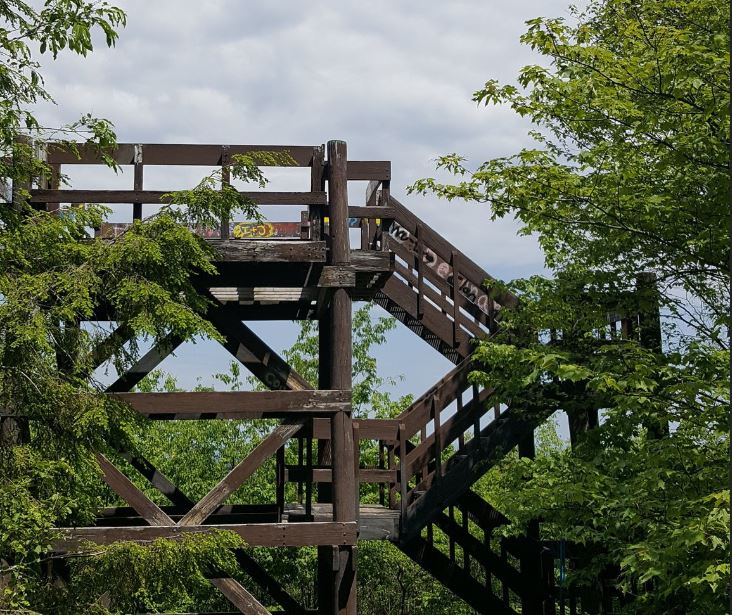
Observation tower on top of Soapstone Mountain.
The observation tower on top of Soapstone Mountain has a commanding view of the area

Also on the summit is the observation platform. Closed for several years due to vandalism, it re-opened in 2018. It features a commanding view of the Connecticut River Valley and the surrounding hills. From the platform to can see Mount Greylock in Massachusetts, Hogback Mountain in Vermont and Mount Monadnock in New Hampshire. All three are over 60 miles away. Springfield, Massachusetts is also in view.

Considering that the view takes in four states, it’s a great place to take in New England’s fall foliage!

Surrounding Forest

The Shenipsit Trail passes around Soapstone Mountain

Soapstone Mountain is located in the middle of the nearly 7000 acre Shenipsit State Forest. The forest includes many forest roads and trails for different outdoor enthusiasts.

The surrounding forest consists of miles of trails. The extensive trail system is used by hikers and mountain bikers. Trails include a variety of terrain from steep sections to relatively flat ones. The trails can either be accessed from the summit area or the base parking area.

The Northeast States CCC Museum in Stafford is located in the Shenipsit State Forest Headquarters
The Northeast States CCC Museum in Stafford is located in the Shenipsit State Forest Headquarters not far from Soapstone Mountain

The regional state forest headquarters is located in Shenipsit State Forest and features the Northeast States CCC Museum. The headquarters are a former CCC Camp and the buildings are setup to show how life was when the CCC was active. They helped plant trees, build roads, picnic and other facilities in forests across the country.

Surrounding Area

The state forest is connected to other conservation areas such as Bald Mountain in Somers which is the highest point along the eastern Connecticut River Valley in Massachusetts. It also connects to several local land trust parcels allowing one to hike from the center of town to the summit on conservation land.

Conclusion

Soapstone Mountain is great place to get out and enjoy nature, even from the comfort of your car or spending an entire day hiking around with rewarding views.

I hope this information on Soapstone was helpful. Check out our other exclusive Guides on LincOn.com.


How cold does it have to be to snow

Snow is typically associated with colder weather but just how cold does it have to be to snow? You might be thinking that it has to be below freezing (32°F/0°C) but that’s incorrect. It actually can be well above freezing. Snow has been recorded at 52° on 10/27/2015 in Minneapolis/St Paul and at 49° at JFK Airport in New York City. The theoretical limit is 52°/11°C but it takes a lot of different circumstances to line up. Generally though, the temperature at the surface needs to be below 41°F/5°C for it to snow.

How can snow form above freezing?

Snow falling in a backyard with temperatures above freezing.
Snow can fall even with temperatures above freezing

You’re probably asking yourself, how can snow form above freezing? Doesn’t ice form at 32°F or 0°C? It does but remember that snow is a tiny ice crystal formed way up in the atmosphere. While the temperature near the ground may say one thing, it’s a different reading the higher up you go. If the temperature in the clouds above you, the snow crystals can form and still fall through the air producing a snowfall when the temperature near the ground is above freezing.

Also, the air contains different amounts of moisture in different places. If a place is dry enough and you introduce moisture to it, that moisture will start to evaporate. That evaporation produces a cooling effect on the surface below it. That’s why we sweat – so when the moisture evaporates we feel cooler! Have you ever noticed frost on a windshield but nowhere else? The moisture evaporated off the surface and cooled it enough until it was below freezing and it froze. Eventually it becomes too warm to sustain ice crystals and melts but that ice formed while the air temperature was above freezing!

Combine those two factors and we have a large portion of the puzzle as to why snow can form at temperatures above freezing. In order to understand that, let’s look at how snow forms for a clue as to how cold does it have to be to snow.

How does snow form?

When moisture is introduced into the atmosphere and the temperature is below freezing, it starts to crystallize. These crystals start combining and then fall to the ground as snowflakes. These flakes in turn fall to the ground as snowfall.

Snowflake crystals
A close look at snowflake crystals

What happens if the temperature is above freezing? That moisture stays as a liquid but it is subject to the conditions around it. If the air is dry, some of that moisture is going to evaporate until the air is equally moist. That evaporation will cause the surface of the water droplet to cool. If it cools to below freezing, it too will freeze and form a snowflake. Get enough of them and they will fall producing snowfall at temperatures above freezing.

Can you predict snow above freezing?

Sure you can! There’s a lot of math that goes into it, including fancy calculations that can factor in the air temperature and the amount of moisture in the air and tell you if snow can form or not. However, there’s a nice calculator that will do this for you:

The Snow Probability Calculator
The Snow Probability Calculator can calculate the chance of it snowing at a given temperature and humidity level.

Another way is to pay close attention to whats called the Wet Bulb temperature. You can do this with a sling psychrometer. It basically has two thermometers – one for the air temperature and the other has a fabric around it to measure the temperature if the air was saturated with moisture. As long as the wet bulb temperature is below freezing, it can snow as long it’s also below freezing in the clouds above you.

Concluding thoughts

So, how cold does it have to be to snow? As we’ve learned, there’s a lot of different factors that come into play but generally it has to be cooler than 41°F/5°C to snow but under some special circumstances it can snow up to 52°F/11°C.

I hope you’ve enjoyed this Guide and invite you to check out our other exclusive Guides on LincOn.com.


Best Self-Care Tips To Live a Happy and Healthy Life

By Gage Hanson

There’s a common misconception that to be happy you need to be successful. Hustle culture has created a society that values month-long trips to the Bahamas, six different cars and custom tailored suits as the pinnacle of human prosperity. However, you don’t need all of that to live happy. Some of the best self-care tips to live a happy and healthy life are simple, easily followed, and can be accessed by everyone on the planet.

            While happiness is an intensely personal feeling and we all get there in completely different ways, there are five self-care tips that can bring a happy life closer to you.

Spend Time Outside

            It wasn’t long ago that humans spent most of their time outdoors. Living, working, and playing indoors is a relatively new phenomena and while air conditioned buildings and couches are nice, they don’t promote a happy life or a healthy one.

Going outside can add to a happy and healthy life
Going outside can add to a happy and healthy life.

            Even if it is for just fifteen minutes at a time, you need to go outside. The health benefits are obvious. The sun gives your body access to vitamin D and the fresh air outdoors does wonders for your body. Even if you live in a big city and the air outside is heavily polluted, it is worth a fifteen minute drive to find a park where the air is much more breathable.

            Spending time outside will make you feel more connected with nature and the world as a whole. You won’t have to do much more than take a walk and your mood will see incredible improvement. Add in the next step, and the results will multiply.

Be Accountable For Something

            There’s a reason dog owners report a decline in depression symptoms. Adopting a pet, caring for plants, or even volunteering regularly at a daycare or humane society are all great ways to keep yourself happy and healthy. Every self-help guru I’ve ever respected has preached serving others as a great way to help yourself.

            Holding yourself accountable to caring for something else motivates you to move, get out of the house, and get active.

Adopting a dog can give you something to be responsible for
Adopting a dog can be one of the best self-care tips to live a happy and healthy life

Adopting a dog would undoubtedly help you spend time outside of your house and you would accomplish tips one and two in one go. However, if you aren’t ready for a pet, taking care of plants would be a good second alternative to keep you on a schedule and focused on helping another living thing.

            Even volunteering will keep you accountable for something. You can help someone else be happy and live happy yourself in the process. From boys and girls clubs to soup kitchens, there are options for any time of time commitment or skill set.

Create Something

            Even if you aren’t a skilled artist that wants to live off of your creations, creative expressions are a quick way to living a healthier and happier life. There have even been studies that prove the correlation between creation and happiness.

            You don’t have to be a master musician or professional painter either. There are a ton of hobbies that can be used as a creative outlet that don’t require tons of skill.

            The list can go on and on. The point of it is that spending an hour a day doing something creative will make you feel more accomplished. Your mood will improve, leading to improved health and more happiness.

Feel Fully, Then Let Go

            There are a lot of people that will tell you “don’t worry about it” or “don’t let it affect you.” While the intention of this type of sentiment is noble, it can lead to people bottling up emotions or not processing life events like they should.

            David Hawkins’s book Letting Go describes a process of dealing with all ranges of emotions in a healthy way that will improve the quality of your life. In a distilled version: you let yourself feel the emotions as they come to you, you observe the reactions and thoughts that they cause, then you let them pass through.

David Hawkin's Letting Go
David Hawkin’s Letting Go

It isn’t easy to accomplish this, especially at first, but if you practice being an observer of your own thoughts and actions, you will gain more mindfulness. This mindfulness will become better control of yourself as well as the ability to feel happiness when most other people are despairing over emotions they can’t properly process.

People often couple this method with meditation. Say that someone gets cut off while driving and lets this event ruin their whole day and put them in a bad mood. To improve on this situation, they should meditate on the event, realize that their anger does not change what happened, acknowledge the fact that they felt this anger, and then let go of the anger.

This methodical process leads to incredible learning and growth. As well as a naturally happy state. A state that is created even better by the next tip.

Live in the Moment

            If you live in the present moment completely, it is almost impossible to not be happy. Anxiety and stress are often caused by worrying about the future. Guilt and shame come from stressing out about what happened in the past. If you forget the past and the future, the present is often a very happy place to be.

            Even moments just as mundane as sitting on your phone reading this article are often overlooked by casual observers of the present. They don’t feel the weight of the phone in their hand, the sound of the cars driving past outside, or the faint smell of a barbecue in the distance. Too often, we don’t appreciate what is happening as it happens. We don’t consider the moment until it has passed.

            If you really, truly want to be happy, you need to let go of the past and future. They are figments of our imagination.

The past is long gone, and the future always stays off in the distance.

The only thing that ever really exists is the present, so why let yourself be bogged down by fears of anything else.

Learn to appreciate each moment as it exists in the present.

I hope you enjoyed this Guide on the best self-care tips to live a happy and healthy life. Please check out our other Guides exclusively on LincOn.com


Best Ways to Meditate: Meditate with a Mantra

Gage Hanson

If you want to improve your meditation, it may be time to meditate with a mantra.

Meditation comes with a host of stereotypes and cliches, one of which you have undoubtedly heard of is the mantra. In most pop culture representations of mediation it is a monk sitting cross-legged, repeating “om,” “peace of mind,” or “I am that I am.”

While it is easy to box mantras in as a mindless saying for meditation, they actually have extreme power. Once you’ve got the hand of meditation basics, such as focusing on breathing and your physical sensation and letting thoughts flow in and out, you may be ready to adopt a mantra and test out its effectiveness.

Meditation Intention

One of the best ways to meditate is to meditate with your intentions in mind. This will help you become a better observer of your own thoughts and reactions to the intention. The intentions of most beginning meditations are to calm your mind and become more in control.

More advanced meditations revolve around centering the self, recognizing non-duality and aligning chakras. Whichever path you are on, a mantra might help. Om meditation isn’t widely used because it is cool. It is used because it works.

Mantras aren’t just some meaningless phrase done as an empty gesture of antique forms of meditation. They are tools that can be used to improve your experience.

Best Ways to Meditate: Meditate with a Mantra

Meditation with a Mantra

Mantras benefit your meditation for two reasons. The first benefit, and the one most likely to help beginners, is a mantra that gives something for your mind to focus on as you try to let go. Most meditation practices use the breath or physical sensations as an object of focus. But mantras can serve the exact same purpose.

As you repeat a word or phrase over and over again, you can focus on this repetition and let your mind start to fall away from the normal buzz that goes on in there. Normally, there is a constant stream of consciousness running through your head. Meditation aims to stop this stream for a time being. Focusing on a mantra will keep your mind off of the thousands of thoughts it would normally revert back to.

The other benefit of using a mantra with your meditation is the transformative power of words and vibrations. Speaking or listening to a mantra invokes both the power of words and of positive vibrations, two key elements to a powerful meditative state.

Mantra Meditation Technique

To start off, you need to figure out what mantra you want to use. There are two options. You can come up with a personal mantra—my preferred technique—or you can use a classic mantra used in common meditation chants. Whichever path you choose, make sure you aren’t just picking a mantra without considering its use. You want something that strikes a chord with you emotionally, spiritually, and vocally.

The best way to meditate is to make sure you are completely in control. That should be true of the mantra you pick. You should know exactly why you chose it.

Personal Mantra

If you choose your own mantra, pick a word or phrase that means something to you and aligns with your values. It should also be something whose actual physical vibrations (the way it sounds) work with you. Something that sounds good.

Personally, I find poems as a good source of mantra inspiration. Rumi is a great author to look at for personal mantras. So are many of the poets from the transcendentalist movement in America, such as Ralph Waldo Emerson and David Thoreau.

Some mantras I like to use are:

  • So it goes
  • Love is a bridge
  • Just keep moving

Classic Mantras

Obviously om meditation is the most famous out there. Om was supposedly the sound the universe made when it came into existence. It plays a large role in Hinduism and Buddhism alike. The word itself means many different things, but is considered an incredibly powerful incantation.

Other popular mantras include:

  • I am that I am
  • Hare Krishna
  • Om Namah Shivaya

All of these have their meanings and if you plan on using a classic mantra for meditation, I suggest researching its meaning and practicing with it to see if it lines up with your meditation intentions.

Meditation Chants

Now it is time to meditate and chant your mantra. I suggest starting your meditation in the exact same way you usually do. Sit up straight, hands on your knees, and start focusing on your breaths. Keep them even and spaced out. Once you’ve started to relax and let go of the iron grip you normally have on your mind, it is time to start your mantra meditation.

Focus on the words. How they feel. How they make you feel. Then, let them pass in and out of your mind just like any thought you would have during a regular meditation session. With each repetition of the mantra, find a freshness to the words, like it is the first time you’ve recited them.

Now, depending on your meditation intention, you can continue like this or you can move on to asking yourself questions or burrowing into your own consciousness. Both of these techniques are easier once you have spent time doing basic meditation practices.

There is no “perfect” way to meditate. It is often said that everyone who meditates is a beginner and there aren’t any masters. Anybody who says otherwise has stalled their own progress. We all have something to learn.

For you, meditating with a mantra might be the best way to learn and progress. There shouldn’t be an end goal for your meditation, but rather each meditation session should help you gain a greater grasp of mindfulness. Hopefully these steps lead you to a better, more successful meditation practice in your search for enlightenment and a more peaceful mind.

I hope you find this guide useful. Please check out our other Guides available exclusively on LincOn.com.


Snowmobiles for Heavy Riders

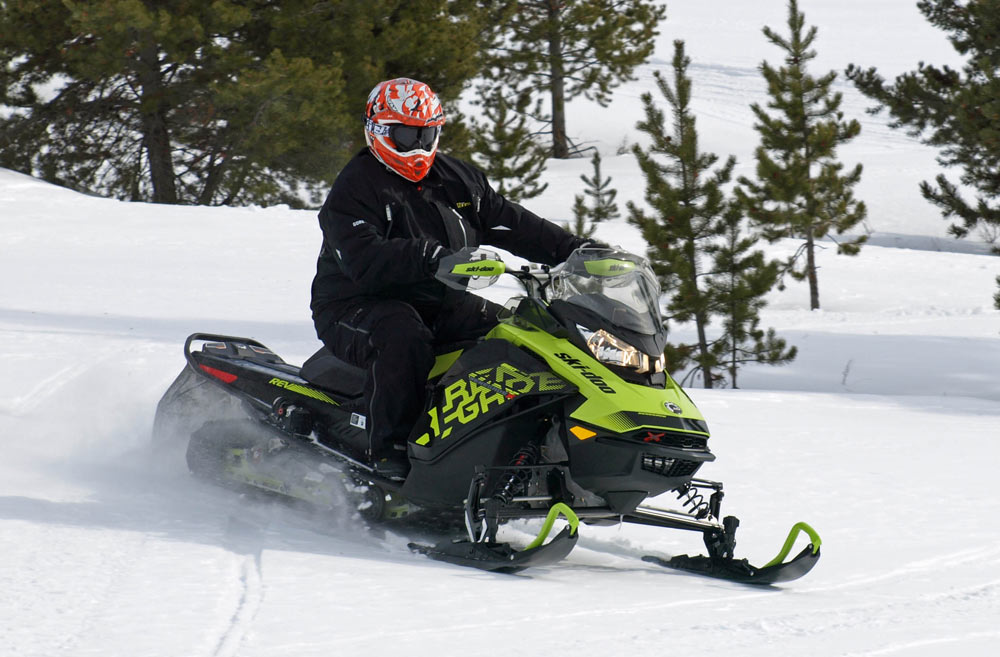
Snowmobiling or sledding is a great activity to get out and explore nature in winter. If you’re a heavy rider, there a few things that you should look for in a sled before you hit the trails. Here are some snowmobiles for heavy riders and a few suggestions of features to look for when buying a new machine.

Snowmobiles for Heavy Riders
Even large people can ride snowmobiles for fun!

Features to look for in a sled for heavy riders

There’s several features that you’ll want to look for in snowmobile. These include the springs and shocks, length, engine performance and weight.

Springs and Shocks

Features to look for start at the base. You’ll want a sled or snow machine with heavy duty springs and shocks. These will absorb the extra weight and flex as you hit different terrain. These can be added to an older sled so you don’t have to buy a new sled. Talk to a local shop and ask about heavy duty springs and re-building shocks to accommodate a heavy rider. Air shocks are easier to adjust than gas shocks and some models like the Yamaha Apex X-TX come with them from the factory. Fox Float shocks can be added to models if they don’t come from the factory with the,

Length

Another feature to look at is length, With a longer sled, you have more surface area for the machine to grip the snow and support you if you’re off-trail. Look for a model that has a length longer than 151″ for best performance.

Engine Performance

Engine performance is another thing that you’ll want to consider. The more power that you have the easier it is for the sled will be able to pull itself and the rider through the snow, especially if it’s not groomed. Look for a n 800cc engine. 700cc would be the minimum but 800cc will give you enough power.

Weight

Weight is another factor. Most newer (2017+) snowmobiles are lighter than their predecessors. Combined with generally more powerful engines, a lighter sled will handle a heavy rider just as if it was a heavier sled with a lighter rider. Being lighter means being able to float better on top of the snow instead of sinking and allow the engine to work more smoothly.

Models to Consider

Here is a list of models that are well suited for larger/overweight riders looking for a good experience on a day out sledding!

Arctic Cat M Hardcore Alpha One

Arctic Cat M Hardcore Alpha One

The Arctic Cat M Hardcore Alpha One is a good contender for a snowmobile for a big rider. It features a near 800cc motor which will give you plenty of power and is available in 154″ & 165″ lengths. You can also order it right from the factory with Fox Float shocks. The Mountain Cat Alpha One is another model by Arctic Cat with the longer length as well.

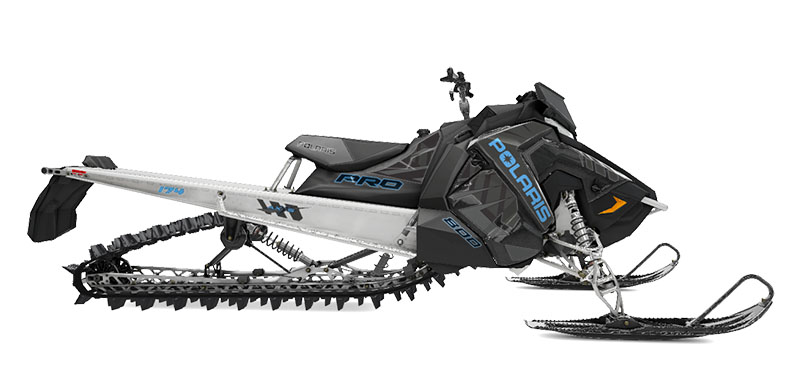
Polaris Pro RMK 174

Polaris Pro RMK 174
Polaris Pro RMK 174

The Polaris Pro RMK 174 features a 174″ track and is a great machine for climbing hills and going off trail. It has an 840cc engine which is certainly going to give you enough power to get through any terrain. Air shocks are not available from the factory but, as we’ve discussed, they can be added aftermarket.

Ski Doo Summit X

Ski Doo Summit X
Ski Doo Summit X

The Ski Doo Summit X features a 175″ length making it one of the longest sleds available. It comes with an 850cc engine so it has plenty of power to take you where you want to go, whether on-trail or not.

Yamaha Mountain Max LE 154

Yamaha Mountain Max LE 154

The Yamaha Mountain Max LE 154 has a 154″ track so it’s one of the shorter models on our list. It features a 794cc engine so it has plenty of power to get you through the deepest snow. It features Fox 2.0 Zero shocks as standard so no need to add them as an option or add them on later.

Other Options for riding in the snow for heavy riders

Polaris Ranger with Track System

In addition to snowmobiles for heavy riders, you can consider other modes of transportation in the snow. There are several companies that sell conversion kits that allow you to add tracks to any ATV, UTV or side-by-side making them very capable machines in the snow. Companies like Camso sell after market conversion kits so you can replace your summer wheels for winter tracks and hit the trails year round.

Some manufacturers also sell kits as an option. Polaris, Arctic Cat and Can Am all sell units that they manufacture for their ATV’s, UTV’s or side-by-sides so if the idea of a snowmobile is intimidating or doesn’t sound comfortable, there are options out there for heavy riders.

Concluding thoughts on snowmobiles for heavy riders

Snowmobiling is a fun sport that allows everyone to get out into nature and enjoy the sites and sounds and have fun at the same time. Hopefully this Guide has helped you and given you ideas on what to look for in a snowmobile for heavy riders. Do you have any suggestions for other models on this list? Be sure to email Dave at dbroer@lincon.com with your suggestion and we’ll consider adding it to the list.

This Guide is part of a series of guides on for heavier people to get out and enjoy the world around them! Be sure to check out our other Guides such as ebkes for heavy people, bikes for heavy people, hiking gear for heavy people and a guide to RVs for heavy people.